We aim to scan all of the Riverton Ranger’s vast archive of photographic negatives. Currently, the best way to do this is with a high-resolution interchangable lens camera and a high-performance macro lens. The resulting negative images are batch-processed in software to invert, and the resulting high resolution image files will be made available in accordance with the agreement. Persuant to that agreement, only low-resolution files will be freely viewable online.
Here’s an example of one such file
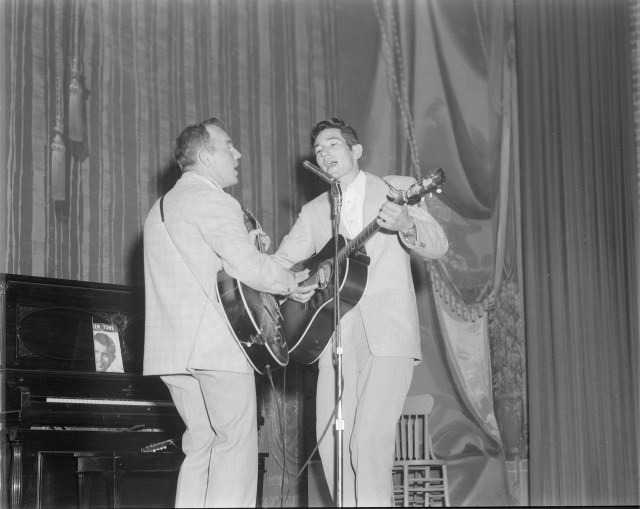
The negative of this image was shot on 120 size film, using the 645 (6 cm by 4.5 cm) format. The actual image size is 46x42mm(approx. 1.81×1.65 inches).
This image was scanned on a 12 megapixel camera, and after cropping the original, the resulting image is roughly 10 megapixels, with pixel dimensions of 3531×2817. The result is equivalent to about 2140 dpi.
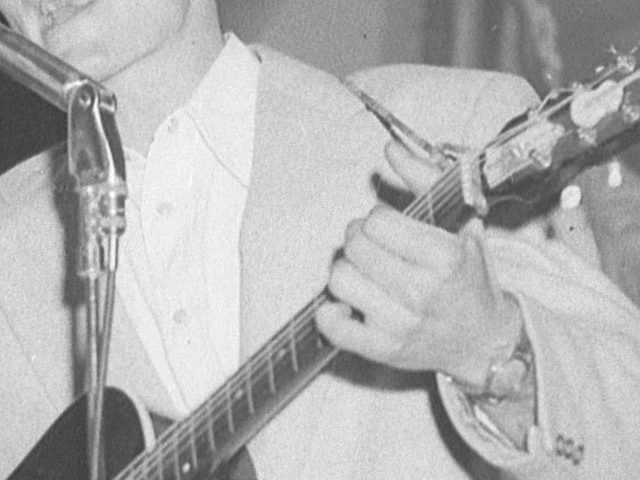
Higher resolution cameras would give us a higher equivalent DPI – for example a readily available 24 megapixel camera, which the project plans to use once we get rolling, would give us closer to a 3200DPI equivalent, and even higher resolution cameras are available. However, even starting at 12 megapixels is sufficient to see all of the detail available in the high speed film typical of the news industry. The image below is a 100% crop of a section of the original. Note that the film grains are visible
Camera scanning also has a greater ability to recover highlight and shadow detail than conventional scanning.